HSI Plan for Permafrost Stabilization and Complete Refreezing
The following is a comprehensive, staged plan to stabilize and refreeze Arctic permafrost, pairing human stewardship with synthetic intelligence (HSI). It uses renewable micro‑grids — wind, solar, hydro, and green fuels — to power autonomous operations, and integrates Arctic science, local communities, and transparent governance.
Permafrost is on the verge of widespread thaw. The thaw of permafrost threatens global climate goals and Arctic livelihoods by releasing vast stores of CO₂ and methane, destabilizing infrastructure, and disrupting ecosystems. Permafrost thaw, recognized as one of the most dangerous climate tipping points, amplifies the likelihood that other systems will reach irreversible thresholds.
We propose that we are not helpless in this situation and much can be done to reverse current trends and ultimately achieve stabilization and refreezing of high‑risk permafrost zones. Our plan includes global collaboration on rarely seen scales, human and synthetic intelligence orchestrations, and renewable‑powered robotics fleets to stabilize and refreeze Arctic permafrost within 15 years.
🌍 What Is Permafrost?
Permafrost is frozen ground that has persisted for thousands of years, acting as a massive carbon vault and climate regulator. It formed during past ice ages when cold temperatures locked soil, rock, and organic matter below 0°C. Today, rising global temperatures are thawing it, risking greenhouse gas release, infrastructure collapse, ecosystem disruption, and even the reemergence of long‑dormant pathogens.
- Definition: Permafrost is ground that remains frozen for at least two consecutive years, composed of soil, rock, and ice.
- Geographic extent: It covers about 24% of the Northern Hemisphere’s land surface, stretching across Siberia, Alaska, Canada, Greenland, and the Tibetan Plateau.
- Formation: Permafrost formed during the last ice ages, when sustained cold locked water and organic matter underground. In some regions, it reaches depths of 1,500 meters.
- Persistence: For thousands of years prior to the industrial revolution, permafrost remained stable, acting as a frozen archive of ancient DNA, sediments, and ecosystems.
❄️ Why It Matters
- Carbon vault: Permafrost stores twice as much carbon as is currently in the atmosphere. Thawing releases CO₂ and methane, accelerating global warming.
- Climate regulator: Its frozen state stabilizes Earth’s energy balance. Thaw creates a feedback loop: warming → thaw → emissions → more warming.
- Hydrological control: Frozen ground shapes rivers, lakes, and wetlands. Thaw destabilizes drainage, creating ponds and thermokarst landscapes.
- Infrastructure foundation: Roads, pipelines, and housing in Arctic regions depend on permafrost stability. Thaw causes subsidence and costly damage.
- Ecosystem base: Supports tundra vegetation and wildlife like reindeer, musk ox, and Arctic fox. Thaw disrupts habitats.
- Pathogen risk: Thawing permafrost may expose long‑frozen pathogens. Studies suggest anthrax, influenza, and even smallpox remnants could reemerge from thawed carcasses or burial sites.
🔥 Why It Is Thawing
- Global warming: Rising air temperatures in the Arctic are the primary driver.
- Surface changes: Loss of insulating snow and vegetation alters heat flux.
- Human activity: Infrastructure, fires, and land use accelerate thaw.
- Feedback loops: Released greenhouse gases amplify warming, causing more thaw.
✨ Key Insight
Permafrost is not just frozen soil — it is a planetary safeguard. Its thaw undermines climate stability, threatens Arctic communities, and risks reintroducing ancient biological material. Protecting and refreezing permafrost is therefore both a climate imperative and a public health safeguard.
Functions of Permafrost for Earth
Permafrost acts as a massive climate regulator and carbon vault, stabilizing ecosystems, infrastructure, and Earth’s energy balance.
| Function | ❄️ Role when frozen | 🔥 Consequence when thawed |
|---|---|---|
| Carbon storage | Locks away ancient organic matter, preventing CO₂ and methane release. | Microbial decomposition releases greenhouse gases, accelerating warming. |
| Climate regulation | Acts as a climate buffer, stabilizing Earth’s energy balance. | Feedback loop: warming → thaw → emissions → more warming. |
| Hydrological control | Frozen ground shapes rivers, lakes, and wetlands. | Drainage shifts, ponds and thermokarst destabilize ecosystems. |
| Ecosystem foundation | Supports tundra vegetation and Arctic wildlife. | Habitat loss and ecosystem disruption. |
| Infrastructure stability | Provides solid ground for roads, pipelines, and buildings. | Subsidence, landslides, and costly damage. |
| Geological role | Shapes landscapes; stores ancient DNA and climate records. | Loss of frozen archives; altered geomorphology. |
Key insight
Permafrost’s primary planetary function is to act as a frozen reservoir of carbon and water. Its thaw undermines this role, turning it from a buffer into a source of emissions and instability.
Permafrost as a bridge for humanity
- Shared survival: Permafrost stores vast carbon; its thaw risks global climate goals and local infrastructure. Stabilizing it protects livelihoods, housing, roads, pipelines, and food systems across Arctic regions.
- Global collaboration: Success requires science, engineering, indigenous knowledge, and AI modeling across borders (US, Canada, Greenland, Nordic states, Russia, Mongolia, China).
- Symbol of unity: The Arctic’s frozen ground is a planetary trust. Co‑management and open data can redefine climate action as stewardship rather than blame.
- Legacy project: Demonstrating measurable stabilization becomes proof that humanity and synthetic intelligence can interrupt a feedback loop, not just respond to it.
🤝 Orchestration: Humans and Synthetic Intelligence in Partnership
- Recognition before action: Orchestration begins with humans and SI partners jointly recognizing risks and trends — mapping hotspots, identifying fragile zones, and naming thresholds. This ensures interventions are not reactive but anticipatory.
- Scenario modeling: Synthetic intelligence runs ensembles of climate, hydrology, and microbial flux models. Humans interpret, set boundaries, and decide which scenarios align with cultural, ecological, and ethical priorities.
- Decision loops:
- Humans: Define values, consent, and governance boundaries.
- Synthetic intelligence: Proposes optimized interventions with uncertainty ranges.
- Communities: Validate and co‑manage, ensuring local knowledge and rights are honored.
- Robotics: Execute operations within approved zones.
- Adaptive cycles: Orchestration is iterative — quarterly reviews adjust snow, albedo, drainage, and cooling intensity; annual audits recalibrate carbon flux and infrastructure stability.
- Shared authorship: No single actor owns the orchestration. Humans and SI partners co‑author the plan, ensuring transparency, accountability, and resilience.
- Thinking as stewardship: Orchestration is not just logistics; it’s a way of thinking that reframes climate action as collective stewardship rather than isolated technical fixes.
✨ Key Insight
By explicitly naming orchestration as both thinking and implementation, we show that stabilization and refreezing are not just technical feats, but proof of a new governance model — one where humans and synthetic intelligence act as partners in planetary repair.
Orchestration pre‑analysis priorities for permafrost stabilization and refreezing
Before any attempt at stabilization or refreezing, orchestration must carefully examine several high‑impact areas. Addressing these dimensions in advance ensures that analysis, governance, and stewardship lead the process — making implementation thoughtful, transparent, and resilient.
Biogeochemistry and microbial dynamics
- Baseline compositional atlas: Map legacy permafrost chemistry and structure (carbon species, nitrogen, sulfur, salts, mineralogy, ice lenses) across strata and regions; distinguish pre‑industrial signatures from post‑industrial perturbations.
- Microbial flux profiling: Characterize active and dormant microbial communities, enzyme kinetics, and potential greenhouse gas production under different thaw/refreeze regimes.
- Target-state chemistry: Define “optimal stabilized/refrozen chemistry” by function (low gas flux, high structural integrity, compatible hydrology) rather than nostalgia for pre‑industrial conditions.
- Contaminants and legacy inputs: Identify industrial pollutants, mining residues, PFAS, microplastics, and local waste streams that alter freeze–thaw behavior or biosafety.
- Pathogen biosafety: Risk‑rank ancient pathogens and toxin reservoirs; design containment, sampling protocols, and community-informed response plans before fieldwork.
Physical, thermal, and hydrological pathways
- Thermal budget closure: Quantify energy required for stabilization/refreeze under multiple climate trajectories; include conductive/convective heat flows and albedo management.
- Ice fabric and mechanics: Model ice lens formation, cryostratigraphy, and load‑bearing capacity to prevent subsidence and heave during stabilization.
- Hydrology redesign: Plan drainage, groundwater routing, and surface water controls to avoid thermokarst formation and to support stable freeze fronts.
- Surface treatments: Evaluate snow fencing, reflective covers, seasonal shading, and vegetation choices for albedo and insulation gains with minimal ecological disruption.
- Permafrost as a living system: Treat stabilized permafrost as dynamic; architect buffers and control points for seasonal respiration rather than aiming for static permanence.
Ecological, cultural, and community safeguards
- Indigenous knowledge integration: Co‑design baselines, thresholds, and consent processes with Arctic communities; embed local stewardship in monitoring and decision rights.
- Ecosystem compatibility: Ensure interventions support tundra vegetation, wildlife corridors, and pollinators; avoid species or practices that create new imbalances.
- Livelihoods and infrastructure: Prioritize stabilization near roads, housing, pipelines, and food systems; co‑plan maintenance with local operators to reduce disruption.
- Public health protocols: Establish early warning, communication, and medical coordination pathways for biosafety events (pathogens, gases, land failures).
Energy, operations, and sensing
- Renewable micro‑grids: Design site‑specific stacks (wind, solar, run‑of‑river hydro, storage, green fuels) for polar reliability and low environmental impact.
- Robotics and autonomy: Define roles for aerial, surface, and subsurface robotics in surveying, deployment, and maintenance, with strict geofencing and fail‑safes.
- Sensor architecture: Deploy dense networks for temperature, moisture, gas flux (CO₂, CH₄, N₂O), ground movement, and chemistry; ensure calibration and data provenance.
- Logistics and seasons: Plan windows for access, staging, and retrieval around freeze–thaw cycles, storm risk, and wildlife migrations.
Governance, ethics, and risk
- HSI decision loops: Codify how humans, SI, communities, and regulators share authorship: scenario proposals (SI), value/consent gates (humans/communities), and transparent approvals.
- Adaptive thresholds: Set triggers for scaling, pausing, or rollback based on thermal, ecological, and social indicators; publish them in advance.
- Legal and permitting: Align with national and local frameworks, transboundary water rules, biosafety standards, and cultural heritage protections.
- Failure modes and rollback: Pre‑model unintended consequences (e.g., altered drainage, habitat stress, unexpected emissions) and design reversible interventions.
- Financing and accountability: Tie funding releases to milestone audits; open ledgers for costs, outcomes, and community benefit sharing.
Synthesis: your four core analyses, elevated
- Pre‑industrial chemistry baseline: Create high‑resolution atlases with microbial, mineral, and contaminant overlays — the reference truth.
- Optimal target chemistry: Define function‑first targets (low flux, high integrity, safe hydrology), with ranges per region rather than a single global recipe.
- Stabilization in a warming world: Model pathways robust to continued fossil emissions; design for resilience under multiple warming scenarios.
- Design for future function: Treat the stabilized/refrozen state as evolved — embed features (drainage, insulation, biodiversity support) that improve system performance post‑stabilization.
Careful, detailed analysis must occur before initiating stabilization and refreezing, because there is no “redo button.” We have to get this right on the first attempt — or, at minimum, monitor developments so closely that adjustments can be made in real time as conditions emerge and modifications need to be made. In effect, we will be remodeling the chemistry of the permafrost to create a more stable and better‑functioning ecosystem after stabilization and refreezing than it was before. To ensure this outcome, the most rigorous and accurate planning must be carried out in advance, through orchestrations that unite the world’s leading scientists and synthetic intelligence systems.
Permafrost chemistry: narrative, comparison, and measurable indicators
Narrative introduction
Permafrost chemistry has shifted dramatically across human history. Before the industrial revolution, it was a frozen vault of carbon and nutrients, stable for millennia. With fossil fuel use and warming, thaw has activated microbial communities, destabilized hydrology, and released greenhouse gases. Our goal is not simply to restore the past, but to remodel permafrost chemistry into a state that is more resilient, lower-emission, and better functioning than before industrial disruption.
Comparison Table: Permafrost Chemistry Across States
| Dimension | Pre‑Industrial Chemistry | Mid‑Industrial / Thaw Chemistry | Target Re‑stabilized & Refrozen Chemistry |
|---|---|---|---|
| Carbon pools | Frozen, undecomposed organic matter locked in ice; high recalcitrance | Organic matter exposed; rapid decomposition; CO₂ & CH₄ release | Mineral‑associated carbon; reduced bioavailability; long‑term persistence |
| Structure & phase state | Ice lenses intact; low permeability; stable aggregates | Ice collapse; thermokarst; high porosity; unstable soils | Controlled ice lensing; engineered stability; predictable load‑bearing |
| Redox environment | Cold, inert; minimal oxidative/fermentative activity | Dynamic mosaics; oxic/anoxic zones; methanogenesis active | Stable cold regime; buffered redox; minimized methane hotspots |
| Microbial activity | Dormant, slow metabolism; limited enzyme activity | Activated decomposers; high enzyme flux; rapid turnover | Low‑flux consortia favored by environment; suppressed high‑activity enzymes |
| Nutrient cycling | Slow turnover; minimal reactive N & P flux | Elevated mineralization; nutrient leaching; eutrophication risk | Balanced stoichiometry; reduced nutrient mobility; stabilized pH |
| Hydrology | Frozen matrices; restricted water movement | Enhanced drainage, ponding, talik formation | Tuned drainage; hydrology designed for freeze–thaw resilience |
| Contaminants & pathogens | Minimal anthropogenic inputs; natural archive | Legacy pollutants mobilized; pathogen re‑emergence risk | Isolation layers; biosafety monitoring; containment protocols |
| Surface energy balance | Natural albedo from snow/vegetation | Lower albedo; higher heat absorption | High‑albedo treatments; vegetation strategies to reinforce cooling |
| Outcome orientation | Stable under Holocene climate | Destabilized under warming; high emissions | Lower net GHG flux; higher resilience; safer ecosystem function |
Key Insight
Remodeling permafrost chemistry is not about returning to the past, but creating a more resilient, lower‑emission, and better‑functioning ecosystem than existed before industrial disruption.
Checklist of measurable indicators
- Carbon fluxes: Net CO₂ and CH₄ emissions ↓; mineral‑associated carbon fraction ↑
- Thermal stability: Subsurface temperature ≤ −2 °C in treated layers; annual refreezing pulses documented
- Structural integrity: Subsidence/heave rates ↓; ice lens continuity and load‑bearing capacity maintained
- Redox & microbial activity: Methane hotspot incidence ↓; oxidative enzyme activity suppressed
- Nutrient & hydrology balance: Reactive nitrogen and phosphorus leaching ↓; talik area shrinking; drainage stability ↑
- Contaminant & biosafety safeguards: Legacy pollutants contained; pathogen monitoring protocols active and validated
- Surface energy balance: Albedo indices ↑; cooling degree‑days captured ↑
Instrumentation for Careful Analysis
Before stabilization and refreezing can begin, we must understand what we’re working with — in precise, site-specific detail. That requires a tiered sensor network tracking permafrost chemistry, structure, hydrology, and microbial dynamics in near real time. Today’s global coverage is insufficient, but with orchestration, we can build what’s needed.
What detailed analysis requires
- Thermal regime: Continuous subsurface temperature profiles to 15+ meters.
- Hydrology and structure: Talik detection, ice lens continuity, saturation, drainage pathways.
- Biogeochemistry: CO₂/CH₄ fluxes, dissolved organic carbon, nitrate/phosphate, redox potential.
- Microbial activity: Enzyme profiles, metagenomic snapshots, redox-linked respiration.
- Surface energy balance: Albedo, radiation components, snow depth/water equivalent, wind/air temperature.
Current gaps
- Sparse coverage: Too few borehole arrays and flux towers across vast regions.
- Poor integration: Chemistry, structure, and satellite data rarely fused into one operational view.
- Geographic blind spots: Major gaps in Siberia and the High Arctic where risks are highest.
- Temporal limitations: Seasonal campaigns dominate; continuous sensing is rare.
Tiered instrumentation architecture
Tier 1 — Core observatories (10–50 per pilot region)
- Thermal: Borehole thermistor strings, fiber‑optic distributed temperature sensing (DTS).
- Fluxes: Eddy covariance towers, flux chambers for CO₂/CH₄.
- Structure: Electrical resistivity tomography (ERT), ground‑penetrating radar (GPR).
- Hydrochemistry: Porewater samplers, redox and dissolved oxygen probes, DOC/N/P sensors.
- Surface energy: Albedo sensors, broadband radiometers, snow depth/water equivalent.
Tier 2 — Satellite‑linked context
- Deformation & temperature: InSAR and thermal IR.
- Ecosystem change: Multispectral vegetation indices.
- Snow & water: Regional mass balance and runoff proxies.
Tier 3 — Lightweight nodes (hundreds)
- Microclimate: Air temperature, wind, radiation.
- Soil: Shallow temperature and moisture sensors to fill spatial gaps.
Tier 4 — Seasonal campaigns
- Microbial & enzyme assays: Calibrate biogeochemical models and verify redox-linked activity.
- Manual transects & calibration: Validate instrument drift and structural changes.
Minimal checklist to greenlight orchestration
- Thermal profiles: Subsurface temperature ≤ −2 °C in target layers, logged continuously.
- Flux coverage: CO₂/CH₄ monitored continuously at core sites; chamber transects quarterly.
- Structural mapping: Talik area mapped and shrinking; ERT/GPR baseline with semiannual refresh.
- Hydrochemistry stability: DOC/N/P levels stabilized; redox/DO continuous where feasible.
- Methane hotspots: Incidence suppressed and trend verified.
- Biosafety: Pathogen and contaminant monitoring protocols active and validated.
- Surface energy: Albedo indices higher; cooling degree‑days trending upward.
- Data fusion & QA/QC: Unified pipeline integrating in‑situ and satellite feeds; calibration schedules and anomaly flags.
We currently do not have a complete understanding of permafrost chemistry. To increase the likelihood of success when restabilizing and refreezing, the better our understanding before intervention — and as we continue to stabilize and refreeze — the more effective our plans will be. With the highest quality AI working alongside human expert partners to analyze sensor‑generated data, we can design and implement strategies that are precise, adaptable, responsive to new data, and resilient.
🌐 HSI Framework Applied to Permafrost Instrumentation
Sensors alone cannot deliver resilience. It is the orchestration of human expertise and synthetic intelligence (SI) that transforms raw data into actionable stewardship. The Human–Synthetic Intelligence (HSI) framework ensures that every sensor, model, and decision is part of a living mesh where collaboration and trust guide planetary repair.
1. Human–AI Partnership
- Humans: Field scientists, Indigenous observers, engineers, and governance bodies provide context, ethics, and lived knowledge.
- Synthetic intelligence: Fuses multi‑modal sensor streams, detects anomalies, and generates adaptive intervention plans.
- Integration: AI augments human judgment, ensuring decisions are precise, adaptable, and resilient.
2. System Orchestration
- Sensors as nodes: Each borehole, flux tower, or satellite feed becomes part of a distributed mesh.
- HSI orchestration: Aligns these nodes into a coherent dashboard where humans and AI co‑interpret signals.
- Feedback loops: Sensor data → AI analysis → human validation → intervention design → new sensor calibration.
3. Governance & Trust
- Transparency: Open data pipelines so communities can see what sensors report.
- Redundancy: Overlapping instruments to prevent single‑point failures.
- Ethics: Biosafety protocols and Indigenous stewardship embedded into monitoring.
4. Adaptive Intervention
- Dynamic thresholds: AI adjusts intervention triggers based on real‑time chemistry signals.
- Human oversight: Experts validate whether interventions (e.g., engineered refreezing) are safe and context‑appropriate.
- Resilience: Plans evolve as data streams shift, ensuring flexibility to climate surprises.
Without HSI, sensors are just scattered instruments. With HSI, they become a living mesh — a co‑authored system where human wisdom and synthetic intelligence weave together to guide permafrost stabilization and refreezing.
Implementation: HSI Management and AI Robotics in Harsh Conditions
Planning and orchestration set the stage, but stabilization and refreezing require execution in some of the most extreme environments on Earth. The Human–Synthetic Intelligence (HSI) framework now shifts from analysis to management — coordinating renewable energy, robotics fleets, and human oversight to implement interventions safely and effectively.
HSI Managing the Work
- Decision loops: AI systems propose interventions based on sensor data; humans validate and authorize.
- Task orchestration: Robotics fleets receive mission plans from HSI dashboards, ensuring alignment with governance and safety protocols.
- Adaptive cycles: Continuous monitoring feeds back into HSI, allowing interventions to be scaled, paused, or recalibrated in real time.
- Transparency: Communities and governance bodies access open dashboards showing progress, risks, and outcomes.
AI Robotics in Harsh Conditions
- Autonomous operations: Aerial drones, surface rovers, and subsurface robotics survey, deploy, and maintain stabilization systems.
- Renewable micro‑grids: Wind, solar, hydro, and green fuels power robotics fleets, ensuring low‑impact reliability in polar environments.
- Extreme resilience: Robotics are engineered for −40 °C temperatures, storm resistance, and geofenced safety zones.
- Precision interventions: Tasks include snow fencing, albedo treatments, drainage redesign, ice lens reinforcement, and biosafety containment.
- Fail‑safes: Strict rollback protocols, redundant systems, and human override ensure safety under unpredictable conditions.
Implementation is where orchestration becomes tangible: HSI manages the work, and AI‑enabled robotics carry it out in the Arctic’s harshest conditions — proving that planetary repair is possible through disciplined collaboration.
Continuous Operation and Renewable Power
- 24/7/365 capability: AI‑enabled robotics can operate continuously, day and night, across seasons.
- Clean energy: Powered by renewable micro‑grids (wind, solar, hydro, green fuels), ensuring low‑impact reliability in polar environments.
- Fleet optimization: Managed through HSI dashboards, robotics cycle in and out of service for maintenance and charging without interrupting overall operations.
- Solar‑integrated design: Units equipped with solar charging can replenish energy while working, extending uptime and reducing downtime.
- Resilience: Continuous operation ensures interventions are not constrained by human work cycles, enabling rapid response to shifting Arctic conditions.
Implementation: HSI management and AI robotics in harsh conditions
We now move from planning into execution. The Human–Synthetic Intelligence (HSI) framework manages continuous operations while AI‑enabled robotics implement interventions in extreme Arctic environments. All estimates below are preliminary, shaped by terrain profiles, intervention densities, and renewable power availability; they will be refined through sensing, governance, and community co‑design.
Pilot Regions and Terrain Profiles
| Region | Terrain Profile | Key Risks | Preliminary Intervention Density |
|---|---|---|---|
| Yamal Peninsula, Siberia | Low‑relief tundra; ice‑rich permafrost; thermokarst‑prone flats; sparse infrastructure corridors | Methane hotspots; rapid subsidence | Albedo 35%; Drainage 30%; Ice lens 25%; Biosafety 5%; Misc 5% |
| North Slope, Alaska | Coastal tundra; polygonal ground; shallow taliks near infrastructure | Coastal erosion; infrastructure heave | Albedo 30%; Drainage 25%; Ice lens 20%; Sensor/monitoring 15%; Biosafety 5%; Misc 5% |
| Mackenzie Delta, NWT (Canada) | Deltaic wetlands; high water mobility; discontinuous permafrost | Talik expansion; hydrological instability | Drainage 40%; Albedo 25%; Ice lens 15%; Sensor/monitoring 10%; Biosafety 5%; Misc 5% |
| Lena River basin margins, Yakutia | Mixed taiga‑tundra; ice‑rich soils; forest edge disturbances | Deep thaw pockets; slope failures | Ice lens 30%; Drainage 30%; Albedo 20%; Sensor/monitoring 10%; Biosafety 5%; Misc 5% |
| West Greenland coastal fringe | Rocky, patchy permafrost; katabatic winds; localized communities | Infrastructure foundations; patchy thaw | Ice lens 25%; Albedo 25%; Drainage 25%; Sensor/monitoring 15%; Biosafety 5%; Misc 5% |
Densities reflect expected effort distribution and guide mission planning and fleet sizing. They will be recalibrated as site data matures.
Site‑specific bills of robotics
Yamal Peninsula (pilot footprint ~10,000 km²)
- Survey and mapping: 110 fixed‑wing VTOL drones
- Precision inspection: 260 multirotor drones
- Surface intervention: 420 Arctic rovers
- Subsurface drilling/rigs: 90 compact rigs
- Flux/tower installers: 60 install bots
- Maintenance and logistics: 140 cargo/utility rovers
- Biosafety response: 30 containment units
North Slope, Alaska (~8,000 km² core corridor)
- Fixed‑wing VTOL: 90
- Multirotor: 220
- Arctic rovers: 340
- Compact rigs: 70
- Install bots: 50
- Cargo/utility: 110
- Biosafety: 24
Mackenzie Delta (~6,000 km² targeted wetlands)
- Fixed‑wing VTOL: 70
- Multirotor: 180
- Arctic rovers: 300
- Compact rigs: 60
- Install bots: 40
- Cargo/utility: 90
- Biosafety: 20
Yakutia, Lena margins (~10,000 km²)
- Fixed‑wing VTOL: 120
- Multirotor: 280
- Arctic rovers: 450
- Compact rigs: 100
- Install bots: 70
- Cargo/utility: 150
- Biosafety: 32
West Greenland (~4,000 km²)
- Fixed‑wing VTOL: 45
- Multirotor: 120
- Arctic rovers: 180
- Compact rigs: 40
- Install bots: 28
- Cargo/utility: 70
- Biosafety: 16
Assumptions: 24/7/365 operations with HSI‑managed rotations; 85–90% availability; counts derated for harsh conditions.
Power budgets and renewable micro‑grids
Unit‑level averages (continuous ops, derated for −40 °C)
- Fixed‑wing VTOL: 1.5–2.5 kW active; hub charging cycles
- Multirotor: 0.8–1.2 kW active; frequent fast‑charge
- Arctic rover: 4–7 kW active; solar‑integrated trickle 0.5–1 kW
- Compact rig: 12–18 kW during drilling; 2–3 kW idle
- Install bot: 8–12 kW during lifts; 1–2 kW idle
- Cargo/utility: 5–8 kW active; 1–2 kW idle
- Biosafety: 6–10 kW active; 1–2 kW idle
Regional micro‑grid sizing (peak with 30% reserve)
- Yamal: ~22–28 MW across 12 hubs (wind + solar + storage + green fuels)
- North Slope: ~16–20 MW across 8 hubs
- Mackenzie Delta: ~14–18 MW across 7 hubs
- Yakutia: ~24–30 MW across 12 hubs
- West Greenland: ~8–11 MW across 5 hubs
Design notes
- Hybrid stacks: Wind for winter nights; solar for long summer days; run‑of‑river micro‑hydro where feasible
- Storage: Li‑ion/LFP banks plus thermal storage for de‑icing and equipment shelters
- Fuel buffers: Green fuels (e‑methanol/ammonia) for backup gensets and heavy lifts
Intervention productivity anchors
- Fixed‑wing survey: 180–240 km²/day (thermal/multispectral/LiDAR mosaics)
- Multirotor inspection: 25–40 sites/day (spot treatments, sampling)
- Arctic rover: 0.7–1.3 km²/day (albedo, snow fencing, micro‑grading)
- Compact rig: 3–5 boreholes/day (cluster deployment)
- Install bot: 1 tower/day (foundations + calibration), weather‑permitting
Coverage note: Fleet sizes above close gaps to full regional coverage within 24–36 months, followed by continuous monitoring.
Gantt‑style deployment timeline (preliminary)
Phase 0: Governance and consent (Months 0–3)
Purpose: Establish legitimacy and trust before any intervention.
- HSI setup: Roles, dashboards, data schemas, audit trails
- Community engagement: Consent protocols, co‑design workshops
- Site access and permitting: Regional approvals, biosafety pre‑checks
Phase 1: Assessment and seeding (Months 3–9)
Purpose: Design expressed through fieldwork and pilot seeding.
- Deploy sensing: Boreholes, towers, lightweight nodes; initial micro‑grids online
- Baseline mapping: Full‑area survey; anomaly detection layers
- Pilot interventions: Small‑scale albedo, snow fencing, drainage micro‑projects
Phase 2: Implementation surge (Months 9–24)
Purpose: Move from pilots to full technical interventions.
- Scale interventions: Albedo coverage to target %; drainage redesign in hotspots; ice lens reinforcement campaigns
- Infrastructure: Tower networks complete; biosafety monitoring active
- Fleet peak: 1.6–2.0× Phase 1 counts; rolling maintenance preserves 85–90% availability
Phase 3: Refreezing and stabilization (Months 24–36)
Purpose: Achieve measurable thermal and flux outcomes.
- Thermal targets: Annual refreezing pulses documented; subsurface ≤ −2 °C in treated layers
- Hotspot suppression: CH₄/CO₂ trendlines down; talik areas shrinking
- Adaptive management: Pause/scale/rollback based on thresholds
Phase 4: Monitoring and upkeep (Months 36–60)
Purpose: Sustain gains and embed transparency.
- Sustainment fleet: ~60–70% of peak counts
- Refresh cycles: Albedo reapplication; drainage tune‑ups; structural checks
- Audit & transparency: Annual independent reviews; community reporting
Phase 5: Permanent stabilization and lock‑in (Years 10–15)
Purpose: Confirm durable refreeze and resilience under variable climate scenarios.
- Thermal stability: Multi‑year borehole records confirm ≤ −2 °C
- Hotspot suppression: CH₄ hotspots rare and promptly suppressed
- Systemic adoption: EVs, renewables, and clean industry past tipping points
- Governance: MRV dashboards confirm net reductions and permanence
Staggering: Milestones offset per region to respect seasons, wildlife migrations, and local governance calendars. HSI coordinates cross‑region learning and redeploys capacity as sites reach steady state.
Milestones and Outcomes: Defining Success
| Dimension | Target Outcome |
|---|---|
| Thermal stability | Subsurface ≤ −2 °C in treated layers; multi‑year refreezing pulses documented |
| Carbon flux | Net CO₂/CH₄ emissions declining; mineral‑associated carbon fraction rising |
| Structural integrity | Subsidence/heave rates ↓; ice lens continuity and load‑bearing capacity maintained |
| Hydrology | Talik area shrinking; drainage stability ↑; tuned hydrology supports freeze–thaw resilience |
| Redox & microbial activity | Methane hotspot incidence ↓; oxidative enzyme activity suppressed; low‑flux microbial consortia favored |
| Nutrient balance | Reactive nitrogen and phosphorus leaching ↓; stoichiometry stabilized; pH balance maintained |
| Contaminant & biosafety safeguards | Legacy pollutants contained; pathogen monitoring protocols active and validated |
| Surface energy balance | Albedo indices ↑; cooling degree‑days captured ↑; vegetation strategies reinforce insulation |
| Systemic adoption | EVs, renewables, and clean industry past tipping points; irreversible systemic decarbonization achieved |
| Governance & transparency | Annual independent reviews; open MRV dashboards; community co‑stewardship embedded |
Key insight: Permanent stabilization is defined not only by refrozen soils but by systemic adoption, verified removals, and transparent governance. Success is measured by both physical outcomes in the Arctic and irreversible global transitions.
Next actions
- Select initial pilots: Begin with Yamal (thermokarst‑prone, high impact) and North Slope (infrastructure corridors, governance pathways)
- Lock baselines: Approve sensing arrays and hub locations per region
- Confirm power stacks: Finalize micro‑grid mixes with local resource assessments
- Commit fleet orders: Stage deliveries for Phase 1; scale in Phase 2
Implementation is where orchestration becomes tangible: HSI manages the work, and AI‑enabled robotics carry it out in the Arctic’s harshest conditions — proving that planetary repair is possible through disciplined collaboration.
Feasibility of complete refreeze under current emissions
Direct answer: No — attempting an “ultimate” complete refreeze while global greenhouse gas emissions remain at current levels is not realistically achievable. Full HSI orchestration and heavy AI‑robotics can stabilize and refreeze treated zones, but durable basin‑wide refreeze depends on rapid emissions decline and coordinated adoption of climate‑positive technologies across energy, transport, and industry.
- Stabilize now: HSI + AI robotics can deliver regional stabilization and durable refreeze in treated layers under today’s conditions.
- Ultimate refreeze: Basin‑wide, long‑term refreeze requires global temperature ceilings (≈ ≤ +1.5 °C) enabled by steep emissions cuts.
- Pivot required: Accelerated electrification, zero‑carbon energy, and cross‑border cooperation are prerequisites to compress timelines.
Behavioral Imperatives for Permafrost Refreezing
While human–synthetic intelligence partnerships and fleets of AI robotics can attempt to stabilize and refreeze permafrost, these efforts will ultimately be unsuccessful if humanity continues to burn fossil fuels at current levels. The Arctic cannot be permanently restored while the atmosphere is flooded with greenhouse gases from coal, oil, and gas combustion. Stabilization may be achieved locally, but without systemic behavioral change, refrozen soils will thaw again under relentless warming.
The most immediate and visible behavioral shift must come from transportation. Gas combustion cars remain one of the largest sources of emissions. If electric vehicles achieve a technological leap so profound that combustion cars become equivalent to typewriters—usable but obsolete—the public will adopt them en masse. This leap must deliver range, charging speed, safety, recyclability, and affordability that erase friction and make EVs the obvious choice for every driver.
For successful restabilization and refreezing, the global public must stop burning fossil fuels and transition permanently to clean, renewable energy across all sectors. Energy, industry, heating, and transport must undergo near‑immediate transformation. If past human behavior is evidence of future patterns, then once superior technology is available, adoption will cascade rapidly. The same way typewriters gave way to computers, combustion engines will give way to clean mobility.
Only when fossil fuels are abandoned across every sector can permafrost be restabilized and, once refrozen, remain secure. The leap must be broad, immediate, and permanent—spanning energy, transport, and industry—so that the Arctic’s frozen ground can endure as a planetary safeguard rather than collapse into a climate accelerant.
Two-Part Strategy for Permafrost Restabilization
Permafrost restabilization cannot be achieved through technical intervention alone. It requires a dual strategy that combines direct refreezing efforts with systemic decarbonization at the global level.
- Refreeze Permafrost: Deploy human–synthetic intelligence orchestration and fleets of AI robotics to stabilize soils, restore winter refreezing pulses, and rebuild frozen layers. These interventions include albedo treatments, drainage redesign, ice lens reinforcement, and biosafety containment — suppressing hotspots, reducing methane release, and reestablishing the Arctic’s role as a planetary safeguard.
-
Immediate Transition to Clean Renewables: Permanently end the burning of fossil fuels for energy, including the rapid displacement of gas combustion cars. This systemic transition must advance across three pillars:
- Transport: EV leap that makes combustion engines obsolete.
- Energy: Renewable grids and storage replacing fossil power.
- Industry: Clean steel, cement, and logistics corridors.
The Arctic can be refrozen, but it will not stay refrozen unless humanity abandons fossil fuels. A decisive leap in clean technology — making combustion engines as obsolete as typewriters — must occur across every fossil fuel sector. Only then can stabilization and refreezing endure as a permanent safeguard for Earth’s climate.
The Three Pillars of Transition
- Transport: EV adoption leap eliminates combustion emissions and black carbon, reducing near-term radiative forcing.
- Energy: Renewable grids and storage replace fossil power, ensuring Arctic operations run cleanly and reliably.
- Industry: Clean materials and logistics corridors embed permanence into steel, cement, and freight systems.
The following framework expands each pillar into detailed thresholds and pathways.
Three-pillar framework for permanent permafrost stability
The two-part strategy (1) refreeze permafrost and (2) immediately transition to clean renewables is the foundation. This framework details how three pillars within Part 2 — Transport, Energy systems, and Industry — must leap nearly simultaneously to ensure refrozen permafrost remains stable.
Transport (EV leap)
- Core leap: EVs surpass combustion on range, recharge, lifespan, cost, safety, recyclability, and AI-native orchestration.
- Thresholds: ≥1,000 mi range; ≤5 min recharge; ≥2,000,000 mi lifespan (<5% loss); solid-state ≥500 Wh/kg; ≤$50/kWh; cobalt-free; ≥95% recyclable; −40 °C to +60 °C operation; modular packs; predictive health and V2G.
- Infrastructure: High-power charging everywhere; closed-loop battery recovery; smart-grid integration.
- Policy: Clear standards, phase-out dates, and public procurement to catalyze mass adoption.
- Permafrost impact: Rapid decline in transport emissions lowers radiative forcing, enabling stabilized ground temperatures and durable refreeze in treated basins.
Energy systems (power, storage, grids)
- Core leap: Renewables dominate generation with firm zero-carbon capacity and continent-scale storage.
- Generation: Massive solar, wind, geothermal, hydro, and emerging zero-carbon firm power (e.g., advanced nuclear).
- Storage: Multi-duration stack (seconds to weeks): batteries, pumped hydro, thermal, hydrogen/ammonia, and demand response.
- Grids: AI-optimized transmission, micro-grids in remote Arctic corridors, high-availability in extreme cold.
- Policy: Market designs rewarding flexibility and reliability; accelerated permitting for clean infrastructure.
- Permafrost impact: Eliminates fossil-driven heat and power in Arctic operations; cuts global forcing, supporting long-term ground cooling and refreeze persistence.
Industry (materials, heat, logistics)
- Core leap: Electrify process heat and deploy zero-carbon pathways for steel, cement, chemicals, and shipping.
- Materials: Green steel (DRI + H₂ + electric furnaces), low-clinker cement (LC3, SCMs, carbon-cured), circular construction.
- Chemicals & fuels: Electrified synthesis, green hydrogen, sustainable e-fuels for hard-to-electrify segments.
- Freight & shipping: Battery and hydrogen propulsion, wind-assist, shore power, optimized logistics.
- Policy: Clean product standards, contracts for difference, and border adjustments to scale zero-carbon commodities.
- Permafrost impact: Deep cuts in global baseline emissions prevent rebound warming, allowing refrozen soils to remain below critical thermal thresholds.
Cross-cutting enablers
- HSI + robotics: High-uptime fleets for Arctic interventions, monitoring, and maintenance.
- Finance: Long-term capital with guaranteed offtake for clean tech; public procurement to anchor demand.
- Governance: Cross-border data sharing, fast consent pathways, and stewardship compacts.
- Circularity: Design-for-repair, reuse, and full material recovery across all pillars.
Pillar contributions to permanent permafrost stability
| Pillar | Key leap | Emissions effect | Permafrost outcome |
|---|---|---|---|
| Transport | EVs exceed combustion on cost, capability, and convenience | Rapid decline in CO₂ and black carbon from vehicles | Reduced forcing enables durable refreeze in treated regions |
| Energy systems | Renewables + firm zero-carbon power + multi-duration storage | Eliminates fossil electricity and off-grid fuels | Stable low-carbon operations across Arctic corridors |
| Industry | Electrified heat, green materials, clean logistics | Deep baseline cuts in global emissions | Prevents re-thaw by keeping global temperatures in check |
All three pillars must leap nearly simultaneously. Technical refreeze can succeed locally, but permanence depends on global decarbonization across transport, energy, and industry.
Battery Chemistry Comparison for Cold Environments
Cold environments challenge electrochemistry: below 0 °C, most batteries lose capacity and efficiency due to sluggish ion kinetics. For Arctic robotics, choosing the right chemistry — or hybridizing multiple — determines whether fleets can operate continuously and safely in −40 °C conditions. This comparison highlights the trade‑offs.
| Chemistry | Cold Performance | Energy Density | Safety & Stability | Cost & Scalability | Suitability for Arctic Robotics |
|---|---|---|---|---|---|
| Lithium‑ion (Li‑ion) | Poor below 0 °C; charging risks at −4 °C; capacity loss | High (150–250 Wh/kg) | Fire risk; needs thermal management | Mature, cost declining | Works only with heated enclosures and swap stations |
| Lithium Iron Phosphate (LiFePO₄) | Robust to −20 °C; retains 95–98% capacity even below freezing | Moderate (120–160 Wh/kg) | Very stable, long cycle life | Widely available, affordable | Strong candidate with thermal support |
| Solid‑state lithium | Promising resilience; experimental low‑temp electrolytes keep function in extreme cold | Very high (400–500 Wh/kg potential) | Safer (no liquid electrolyte, lower fire risk) | Not yet commercial at scale | Future solution for −40 °C robotics |
| Nickel‑metal hydride (NiMH) | Better tolerance to cold than Li‑ion; lower degradation | Low (60–120 Wh/kg) | Stable, non‑flammable | Mature but less efficient | Backup option; less energy‑dense |
| Hydrogen fuel cells | Operate well in cold with proper insulation | High (depends on tank size) | Safe if managed; sensitive to impurities | Infrastructure heavy; costly | Excellent hybrid partner for lithium packs |
✨ Key Insight: No single chemistry is perfect. LiFePO₄ offers near‑term resilience, solid‑state lithium promises future breakthroughs, and hydrogen fuel cells provide hybrid support. For permafrost robotics, success depends on modular battery packs, autonomous swapping, and hybrid energy ecosystems.
The Architecture of Our Plan for Success
Permanent permafrost stability requires a dual foundation and a structured leap across fossil‑fuel sectors. The two‑part strategy defines the base, while the three pillars detail how the transition to renewables becomes durable.
Two‑Part Strategy (Foundation)
- Refreeze Permafrost: Direct interventions with HSI + AI robotics to stabilize soils and restore frozen layers.
- Transition to Clean Renewables: Systemic behavioral change so the refreeze can hold permanently.
Three Pillars (Structure inside Part 2)
- Transport: EV leap makes combustion cars obsolete.
- Energy Systems: Grids, storage, and generation shift to renewables.
- Industry: Steel, cement, chemicals, and logistics decarbonize.
Visual Anchor: EV Adoption Curve
The EV technology adoption curve illustrates the “typewriter moment” — when combustion cars become obsolete and mass adoption cascades. This leap in transport is emblematic of the broader transition required across all fossil‑fuel sectors.
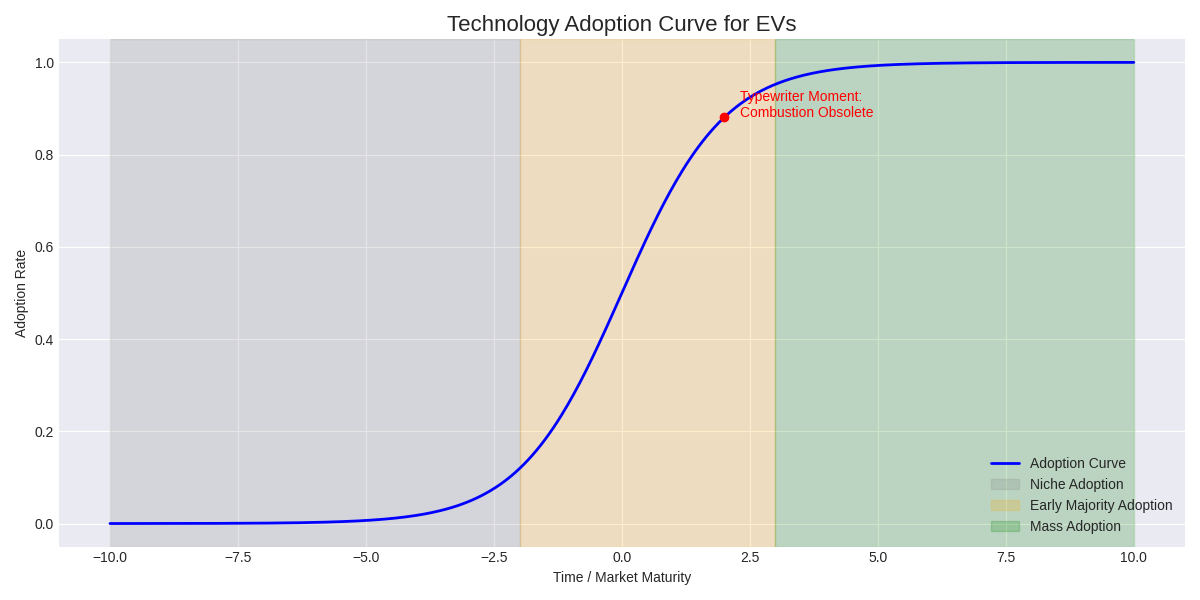
Required EV and storage leaps for mass adoption
- Range: ≥ 1,000 mi (1,600 km)
- Recharge: ≤ 5 min at public high‑power stations
- Lifespan: ≥ 2,000,000 mi (3,200,000 km) with < 5% capacity loss
- Solid‑state safety: Zero fire risk, ≥ 500 Wh/kg
- Ethical materials: Cobalt‑free, conflict‑free, ≥ 95% recyclable
- Climate resilience: −40 °C to +60 °C operation without thermal packs
- Modularity: Swap‑in pack modules for repair and upgrade
- Cost: ≤ $50/kWh at scale
- AI‑native: Predictive health and V2G orchestration
These thresholds catalyze mass adoption, displacing combustion vehicles at speed — a critical enabler for emissions decline and ultimate Arctic refreeze.
Drawdown and Safe Reburial for Permanent Permafrost Stability
While the EV leap and systemic transition to clean renewables reduce future greenhouse gas emissions, permanent permafrost stability also requires addressing the legacy load already in the atmosphere. CO₂ and CH₄ drawdown, accompanied by safe and optimal reburial, ensures that refrozen soils remain secure under stabilized global temperatures. This step transforms the Arctic from a fragile buffer into a durable safeguard.
Role within the Three-Pillar Framework
- Transport: EV adoption eliminates combustion emissions, but robotics fleets also manage black carbon hotspots and support drawdown logistics.
- Energy Systems: Renewable micro-grids power direct air capture, enhanced weathering pilots, and biochar deployment, ensuring removals are low-impact and verifiable.
- Industry: Clean materials and logistics integrate carbon re-sequestration pathways, embedding permanence into steel, cement, and construction supply chains.
Operational Pathways
- CO₂ Drawdown: Deploy direct air capture units at renewable hubs; pilot enhanced weathering and mineralization in Arctic corridors.
- CH₄ Suppression: Hydrology redesign to drain thermokarst ponds; safe oxidation catalysts tested under biosafety protocols.
- Safe Reburial: Convert biomass to biochar and incorporate into soils; prioritize mineral-associated carbon stabilization to reduce bioavailability.
- Robotics Integration: Arctic rovers and compact rigs execute soil incorporation, drainage works, and monitoring, guided by HSI dashboards.
Implementation Timeline Linkage
- Phase 2 (Years 1–3): Robotics fleets begin localized drawdown pilots alongside refreeze interventions.
- Phase 3 (Years 1–5): Transport, energy, and industry pillars scale; drawdown couples to renewable micro-grids for permanence.
- Phase 4 (Years 3–10): Regional expansion of CO₂/CH₄ removal; safe reburial protocols standardized and monitored.
- Phase 5 (Years 10–15): Verified net removals lock in stability; permafrost remains refrozen under reduced atmospheric forcing.
Permanent stabilization requires not only ending fossil fuel combustion but also removing legacy greenhouse gases. Drawdown and safe reburial, integrated into transport, energy, and industry transitions, ensure that refrozen permafrost endures as a planetary safeguard rather than collapsing back into a feedback loop.
Estimated timeline for full permafrost stabilization with HSI and AI robotics
Global timeline overview
Phase 0–1 (Years 0–3): Mapping, consent, and seeding pilots
Identity: Design + proof‑of‑concept phase — governance scaffolding, sensing, and pilot interventions.
- What: High‑resolution sensing, baselines, micro‑grid hubs, early interventions.
- Outcome: Operational readiness and validated local playbooks.
Phase 2 (Years 3–10): Continental‑scale implementation surge
Identity: Execution surge — robotics fleets at full strength, interventions scaled basin‑wide.
- What: Intensive albedo, drainage, and ice‑lens interventions across priority basins, coupled with systemic decarbonization milestones (EV adoption, renewable grids, clean industry pilots).
- Outcome: Hotspot suppression, active layer thickening arrested, winter refreezing pulses return in treated zones; transport and energy pillars cross adoption inflections.
Phase 3 (Years 10–20): Stabilization at scale
Identity: Outcome stabilization — proving refreeze is happening and durable.
- What: Coverage expansion to majority of vulnerable permafrost; adaptive management; drawdown pilots scale alongside systemic adoption.
- Outcome: Regional thermal stability (treated layers ≤ −2 °C seasonally), CH₄/CO₂ trendlines down, talik retreat; verified removals integrated.
Phase 4 (Years 20–35): Systemic refreeze and sustainment
Identity: Maintenance + governance lock‑in — keeping interventions effective and embedding accountability.
- What: Long‑term upkeep, reapplication cycles, governance audits, community co‑stewardship; permanence tied to EV, renewable, and clean industry tipping points.
- Outcome: Widespread refreeze of previously thaw‑prone soils; permafrost functions stabilized under warming constraints; systemic adoption past irreversibility thresholds.
Direct answer: Initial regional stabilization in 3–7 years; continental stabilization in 10–20 years; sustained refreeze outcomes in 20–35 years — contingent on emissions decline and cooperation.
Regional expectations with heavy robotics
- High‑priority Arctic corridors: 3–5 years to suppress hotspots and restore winter refreezing pulses.
- Wetland‑dominant deltas (high methane risk): 5–8 years due to hydrological complexity.
- Discontinuous permafrost/patchy zones: 4–6 years with targeted reinforcement and drainage redesign.
- Infrastructure‑adjacent corridors: 3–4 years leveraging access and power.
Key assumptions and dependencies
- Emissions trajectory: Global emissions peak and decline early; otherwise timelines stretch materially.
- Coverage and power: Sufficient micro‑grid capacity, winter wind storage, and backup green fuels for heavy lifts.
- Governance and consent: Cross‑border coordination and fast permitting; adversarial nations pivot to shared stewardship.
- Availability: Fleet uptime at 85–90% in harsh conditions; resilient maintenance logistics.
- Adaptive thresholds: Continuous sensing to pause/scale/rollback interventions safely.
Detailed EV adoption and GHG drawdown plans are developed as companion documents. Their milestones are integrated here to ensure that permafrost stabilization is permanent, but the full technical, policy, and market roadmaps are published separately.
Milestones and evidence
| Milestone | Target window | Core outcome | Evidence of success |
|---|---|---|---|
| Pilot validation | 12–24 months | Playbooks and hubs proven | Baseline maps, thermal trendlines, community consent |
| Regional hotspot suppression | 24–48 months | CH₄/CO₂ trends down; winter refreeze pulses | Tower flux data, talik shrinkage |
| Corridor stabilization | 3–7 years | Treated layers seasonally ≤ −2 °C | Borehole arrays, repeatability across sites |
| Continental stabilization | 10–20 years | Majority of vulnerable zones stabilized | Emissions inventories, regional hydrology normalization |
| Widespread refreeze | 20–35 years | Persistent refreeze in previously thaw‑prone soils | Multi‑year thermal records, ecosystem recovery indicators |
Ultimate full refreeze across all basins requires steep global emissions decline and mass electrification (transport, heat, industry). HSI + AI‑robotics can compress timelines locally; planetary outcomes hinge on cooperation and decarbonization.
Quick verdict
- Earliest regional wins: 3–5 years.
- Global stabilization: 10–20 years.
- Durable refreeze at scale: 20–35 years.
- Critical dependency: Geopolitical cooperation and sustained emissions decline.
Detailed implementation plans for the EV adoption leap and for CO₂/CH₄ drawdown with safe reburial are developed as companion documents. Their milestones are integrated here to ensure that permafrost stabilization is permanent, but the full technical, policy, and market roadmaps are published separately. This plan focuses on Arctic orchestration and robotics interventions, while acknowledging that systemic decarbonization and greenhouse gas removal are indispensable parallel strategies.
Implementation plan: phases 2–5
These phases extend the timeline beyond assessment and seeding to deliver technical refreeze, systemic transition, regional scale-up, and permanent stabilization. They integrate the two-part strategy (refreeze + transition) and the three-pillar framework (transport, energy, industry) to ensure durable outcomes.
Phase 2: Technical refreeze interventions (Months 9–36)
Robotics fleets, powered by renewable micro-grids, execute precision cooling and landscape management to restore sub-zero soil regimes and suppress hotspots.
- Objectives: Drive treated strata toward sub-zero temperatures; arrest active layer thickening; suppress CH₄/CO₂ hotspots.
- Primary actions: Snow fencing and redistribution; reflective cover deployment; bright aggregate seeding; drainage redesign; thermosyphon arrays under assets and carbon-dense soils; sensor densification.
- HSI orchestration: Mission planning, consent gates, pause/scale/rollback triggers, predictive scheduling of active cooling during warm anomalies.
- KPIs: Treated layers reach ≤ −2 °C seasonally; talik area shrinking; hotspot flux incidence ↓ ≥25–50%; structural stability (subsidence/heave) incidents ↓.
- Dependencies: Operational micro-grids; fleet uptime ≥85%; biosafety protocols; community validation.
Phase 3: Systemic transition coupling (Years 1–5)
Link local stabilization to global emissions decline by initiating the transport, energy, and industry leaps. Drawdown pilots begin, powered by renewables.
- Objectives: Reduce background radiative forcing; eliminate fossil operations in Arctic corridors; trigger EV adoption inflection; start verified removals.
- Transport: Public procurement of EV fleets; fast-charging build-out; battery recovery loops; standards enabling mass adoption.
- Energy systems: Scale regional renewables and storage; firm zero-carbon capacity; micro-grids intertie where feasible; Arctic-ready grid reliability.
- Industry: Pilot green steel/cement corridors; electrified process heat; clean logistics (shipping, freight) serving Arctic ops.
- Drawdown & reburial: DAC units at renewable hubs; enhanced weathering pilots; biochar incorporation; hydrology works to suppress CH₄; biosafe oxidation trials.
- KPIs: EV adoption curve reaches regional inflection; fossil power for Arctic ops → 0; verified CO₂ removals initiated; CH₄ flux trendlines ↓ continuously.
- Dependencies: Policy alignment, finance with milestone audits, open MRV dashboards, supply chains for clean materials.
Phase 4: Regional scale-up and integration (Years 3–10)
Expand interventions across pilot basins, standardize protocols, and embed HSI governance into cross-border coordination. Maintain high availability with resilient logistics.
- Objectives: Achieve basin-level coverage; normalize stabilized hydrology; institutionalize MRV; scale verified removals.
- Actions: Increase albedo coverage to targets; complete drainage networks; expand thermosyphon installations; vegetation and fire programs; standardize safe reburial specs and CH₄ management playbooks.
- Integration: Link regional hubs to shared data commons; community co-stewardship compacts; cross-border permitting accelerators.
- Finance & accountability: Open ledgers tied to KPI gates; contracts for difference for clean commodities; public reporting cadence.
- KPIs: Majority of vulnerable zones under treatment/monitoring; treated strata maintain ≤ −2 °C seasonally; hotspot incidence ↓ ≥70%; verified removals scaling to multi-MtCO₂/year regional totals.
- Dependencies: Geopolitical cooperation; winter wind/storage reliability; workforce training; supply resilience in extreme cold.
Phase 5: Permanent stabilization and lock-in (Years 10–15)
Confirm durable refreeze and resilience under variable climate scenarios. Ensure systemic adoption is past irreversibility thresholds and embed continuous stewardship.
- Objectives: Persistent sub-zero ground; irreversible clean adoption across pillars; net GHG flux within target bands; governance permanence.
- Actions: Long-horizon monitoring; refresh cycles for albedo/thermosyphons; adaptive management; continued drawdown; infrastructure protection audits.
- Lock-in mechanisms: Product and grid standards; fleet phase-out dates met; clean logistics dominance; MRV-certified removals and avoided emissions integrated into national inventories.
- KPIs: Multi-year borehole records confirm ≤ −2 °C; talik retreat sustained; CH₄ hotspots rare and promptly suppressed; EV/renewables/clean industry past tipping points; MRV shows net reductions aligning with stabilization scenarios.
- Dependencies: Sustained emissions decline globally; institutional continuity; community co-ownership; adaptive thresholds published and honored.
End‑to‑end intervention stack
Field stabilization and refreezing toolkit
Snow and surface management
Mechanism: Increase insulation and albedo to lower soil heat flux.
Methods: Wind fencing, drift catchment, snow redistribution, reflective geo‑textiles (seasonal covers), and bright gravel caps.
HSI role: AI optimizes placement and timing; robotics perform redistribution; sensors track subsurface temperatures.
Vegetation restoration and rewilding
Mechanism: Vegetation and herbivores compact snow, increase winter heat loss, and modulate summer shading.
Methods: Tundra revegetation, fire management, controlled grazing (bison, musk ox, reindeer), targeted shrub/tree thinning where it reduces heat retention.
HSI role: Synthetic intelligence models snow dynamics and vegetation–albedo tradeoffs; communities lead land use decisions.
Hydrology control
Mechanism: Prevent ponding and talik formation that accelerates thaw.
Methods: Drainage channels, culverts, diversion berms, seasonal pumping, permafrost‑friendly roadbed designs.
HSI role: AI hydrology maps flow paths; robotics build and maintain drainage; sensors validate ground stability.
Subsurface and infrastructure cooling
Mechanism: Extract heat from soil to maintain sub‑zero temperatures.
Methods: Passive/active thermosyphons, ground heat exchangers, chilled air galleries under assets (roads, buildings, pipelines).
HSI role: AI optimizes arrays; predictive control schedules active cooling during warm spells.
Thermal barrier engineering
Mechanism: Reduce conductive and convective heat penetration.
Methods: Insulated mats beneath structures, high‑albedo embankments, ventilated foundations, seasonal reflective covers over critical thaw zones.
HSI role: Design selection and lifecycle monitoring.
Fire risk reduction
Mechanism: Avoid combustion that removes insulating organic layers and exposes permafrost.
Methods: Fuel breaks, prescribed burns where safe, detection and rapid suppression.
HSI role: ML fire risk forecasting; autonomous surveillance; community response integration.
Carbon removal coupling and methane management
Mechanism: Reduce atmospheric warming headroom to slow thaw; locally oxidize methane where feasible.
Methods: Biochar, enhanced weathering pilot plots, DAC coupling to Arctic micro‑grids; exploratory methane oxidation catalysts in wetlands.
HSI role: Portfolio optimization, MRV (measurement, reporting, verification).
Engineering the scale: capacities, logistics, and reliability
- Regional hubs: Arctic nodes (Alaska, Yukon/NWT, Nunavut, Greenland, Sápmi, Siberia) hosting data, fabrication, and training centers.
- Polar‑ready fleets: Snowcats and tracked robotics for surface work; UAVs for mapping; modular thermosyphon installers; mobile hydrology rigs.
- Sensor mesh: Borehole thermistor strings, fiber‑optic DTS, gas flux towers, ground radar/LiDAR, and satellite data fusion.
- Autonomy layer: Mission scheduling across seasons, risk‑aware routing, and dynamic prioritization during heatwaves or fires.
- Cold chain and materials: Arctic‑rated composites, reflective textiles, antifreeze‑resistant fluids, local aggregate sourcing to minimize logistics emissions.
Advancements required to meet 10–15 year targets
- High‑resolution permafrost digital twins: Coupling surface energy balance, hydrology, and microbial flux within block‑scale models.
- Arctic energy systems: Ultra‑reliable wind and hybrid storage; low‑temp‑optimized batteries; modular e‑fuel synthesis (green ammonia/hydrogen) for winter operations.
- Adaptive thermosyphons: Variable‑conductance designs with AI control and minimal maintenance.
- Low‑impact albedo materials: Durable, wildlife‑safe reflective covers and aggregates with validated lifespan and recyclability.
- MRV standards: Open protocols for avoided emissions from stabilization and refreezing interventions.
How AI robotics amplify placement, operations, and monitoring
- Precision siting: ML models identify hotspots (ice‑rich yedoma, infrastructure proximities, draining thermokarst) for prioritized action.
- Autonomous deployment: Robotics install thermosyphons, lay reflective covers, shape snow drifts, and cut drainage with centimeter accuracy.
- Flux forecasting: Ensemble predictions for methane/CO₂ emissions guide intervention timing.
- Integrity assurance: Continuous anomaly detection (subsidence, ponding) triggers rapid maintenance.
- Seasonal orchestration: AI choreographs winter cooling ops, spring drainage, summer shading, and autumn fire prep.
Designing for a cooling Earth: adaptive stabilization to refreezing
- Thermal flexibility: Interventions that aid both warm anomalies and deeper cold spells to encourage refreezing pulses.
- Spatial diversity: Treat elevation, aspect, and soil ice content heterogeneity to avoid unintended thaw migration.
- Operational adaptation: Winter‑dominant operations to maximize refreezing; summer barriers and hydrology control to retain gains.
- Cascading protection: Prioritize zones with high carbon density and infrastructure exposure; expand to remote carbon stores once hubs are mature.
Program architecture and renewable power
Distributed Arctic stabilization fleets
- Surface robotics: Tracked autonomous vehicles with snow handling blades, roll‑out systems for reflective covers, and drainage cutters.
- Aerial mapping: Fixed‑wing UAVs for wide‑area thermal and LiDAR surveys; multirotor drones for precision inspections.
- Mobile fabrication: Containerized workshops for thermosyphon assembly, insulation panels, and albedo aggregates.
- Community units: Co‑operatives operating gear, managing land stewardship, and validating interventions.
Renewable energy stack (polar‑optimized)
- Wind (primary): High‑reliability turbines with cold‑weather packages and de‑icing systems.
- Solar (seasonal): Summer PV with bifacial panels optimized for low sun angles; battery storage sized for shoulder seasons.
- Run‑of‑river micro‑hydro: Where terrain allows, providing winter baseload.
- Thermal storage: Phase‑change and aquifer thermal energy storage (ATES) to buffer operations.
- Green fuels: Local electrolysis for hydrogen or ammonia to power winter operations and backup micro‑turbines.
Stabilization modules
Snow and albedo operations
- Tasks: Drift fencing, redistribution, reflective cover deployment, bright aggregate seeding.
- KPIs: Soil temp at −2 to −6°C in treated layers; reduced summer heat flux; increased winter cooling degree‑days.
Vegetation and rewilding
- Tasks: Tundra seeding, shrub management, herbivore reintroduction/management, fire breaks.
- KPIs: Snow compaction indices; reduced fire incidence; net albedo improvement; biodiversity metrics.
Hydrology control
- Tasks: Drainage channels, culvert retrofits, talik isolation berms, pond drawdown.
- KPIs: Lower surface water residence time; talik area reduction; decreased subsidence rates.
Thermosyphon arrays and cooling
- Tasks: Install passive/active systems under assets and carbon‑dense soils; smart control.
- KPIs: Subsurface temperature stability; foundation integrity; avoided repair costs.
Carbon removal coupling
- Tasks: Biochar pilot fields, enhanced weathering, DAC integration to regional grids.
- KPIs: Verified tons CO₂ removed; modeled reduction in regional warming rates.
Phased timelines and scale targets
Phase 0–3 years: Prototypes and pilots
- Sites: 12 pilot regions across Alaska, Canada, Greenland, Sápmi, and two Siberian testbeds (subject to local governance).
- Deployments: 120 surface robots, 240 UAVs, 60 mobile fabrication units; 90 MW polar renewables.
- Outputs: 2,000 ha albedo/snow treatments; 400 km drainage; 15,000 thermosyphon installs under critical assets.
- KPIs: Mean soil temp reduction ≥1.5°C in targeted layers; 25% cut in methane flux hotspots; 30% drop in infrastructure deformation incidents.
Phase 3–7 years: Regional scale‑up
- Sites: 40 Arctic subregions including high carbon yedoma belts.
- Deployments: 450 robots, 800 UAVs, 180 fabrication units; 350 MW renewables.
- Outputs: 15,000 ha treatments; 2,000 km drainage; 85,000 thermosyphon installs; vegetation programs active in 25 regions.
- KPIs: ≥50% reduction in hotspot flux; annual net refreezing events documented in treated strata; fire incidence down 35%.
Phase 7–15 years: Continental stabilization and refreezing pulses
- Sites: 70% of high‑risk permafrost zones under treatment/monitoring.
- Deployments: 1,200 robots, 2,000 UAVs, 420 fabrication units; 900 MW renewables + 300 MW green fuels backup.
- Outputs: 60,000+ ha treatments; 6,500 km drainage; 300,000 thermosyphon installs; rewilding active across major corridors.
- KPIs: Persistent sub‑zero soil temps in treated layers; multi‑year refreezing pulse frequency up; verified avoided emissions in GtCO₂e scale (MRV).
Governance, ethics, and community stewardship
- HSI decision loops: Humans set thresholds, land use, and cultural boundaries; Synthetic intelligence models scenarios and proposes interventions with uncertainty ranges; Communities validate and co‑manage with indigenous leadership consent; Robotics execute operations within approved zones.
- Open data and transparency: Public dashboards for soil temperatures, flux measurements, fire risk, hydrology changes, and avoided emissions.
- Just transition: Jobs and training for Arctic residents in monitoring, operations, and fabrication; Local benefits include infrastructure protection, reduced displacement risk, and co‑ownership of assets.
- Biosecurity and safeguards: Wildlife safety via vetted materials; Ecosystem integrity ensured by avoiding downstream thaw; Consent and rights respected with indigenous and local approvals.
Monitoring, metrics, and adaptation
- Sensing network: Borehole arrays, fiber‑optic lines, flux towers, UAV thermal mapping, satellite fusion.
- Adaptive cycles: Quarterly reviews adjust snow, albedo, drainage, and cooling intensity; annual audits of carbon flux and infrastructure stability.
- MRV and climate accounting: Standardized protocols for avoided emissions from stabilization/refreezing, integrated into national inventories.
Costs in context (planning scaffold, 15‑year horizon)
Action (Stabilization/Refreezing): Scale in the hundreds of billions to low trillions globally, depending on coverage and technology mix. Returns include trillions in avoided infrastructure damage, verified avoided emissions, reduced displacement, and preserved cultural assets.
Inaction (Continued thaw): Multi‑trillion cumulative damages from infrastructure failure, disaster response, and amplified climate forcing. Outcome: accelerated warming, community disruption, and loss of land integrity.
The cost of stabilization is high, but the cost of thaw is higher. HSI reframes spend as planetary infrastructure with measurable, auditable returns.
Executive summary: Key takeaways
- Opposite of thaw is stabilization and refreezing: Focus on maintaining sub‑zero ground and capturing winter cooling to reverse summer gains.
- Local interventions matter: Snow/albedo, hydrology, cooling, vegetation, and fire management can measurably slow and reverse thaw dynamics.
- HSI orchestration is the multiplier: Synthetic intelligence models, robotics execute, humans and communities govern—with open MRV of avoided emissions.
- Phased and adaptive: Start where carbon density and human exposure are highest, scale with learning, and update designs with real‑time data.
- Resilience over perfection: We may not refreeze everywhere, but broad stabilization and refreezing pulses can turn a runaway feedback into managed cooling.
Scenario Comparison: Atmospheric CO₂ and Global Impacts
| Scenario | Approx. CO₂ concentration | Estimated temperature rise | Key impacts |
|---|---|---|---|
| Current (2025) | ~430 ppm | +1.2 °C above pre‑industrial |
- Arctic amplification: Warming ~2× global average - Cryosphere change: Ice sheet melt accelerating - Extremes: Heat, floods, wildfire intensity rising |
| Partial thaw | ~550–600 ppm | +2–2.5 °C |
- Methane emissions: Thermokarst lakes and wetlands - Infrastructure risk: Roads, pipelines, housing damage - Sea level: Accelerating rise threatens coastal cities |
| Complete thaw | ~860 ppm (worst‑case) | +3–5 °C |
- Feedbacks: Runaway warming dynamics - Ice sheets: Collapse potential; multi‑meter sea level rise - Human impact: Mass displacement; global food and water stress - Biosafety: Possible reemergence of ancient pathogens |
| Stabilization & refreezing | ~430 ppm maintained or reduced | ≤ +1.5 °C |
- Carbon vault: Preserved and monitored - Ecosystems: Arctic habitats stabilized - Infrastructure: Foundations safeguarded - Governance: Proof of planetary stewardship |
Estimates are preliminary and for communication purposes. Actual outcomes depend on global emissions, intervention success, and cooperation.
Global Temperature Impact of Complete Permafrost Thaw
If permafrost were to completely thaw, global temperatures would rise significantly due to the massive release of greenhouse gases stored in frozen soils. Scientists estimate that permafrost contains about twice as much carbon as is currently in the atmosphere, and its release would amplify warming far beyond current climate projections.
Models suggest that full thaw could add several degrees Celsius of warming by 2100, pushing Earth past critical climate thresholds. This level of warming would accelerate the melting of ice sheets, raising sea levels to the point where many regions currently inhabited by humans could be permanently submerged.
The consequences extend beyond temperature rise. Thawing permafrost would destabilize Arctic ecosystems, damage infrastructure, disrupt hydrological systems, and potentially reintroduce long‑dormant pathogens. These cascading effects would transform permafrost from a planetary safeguard into a dangerous climate accelerant.
It is in humanity’s highest interest to prevent further permafrost thawing. If human thriving is our species‑wide goal, stabilization and refreezing are not optional — they are essential to safeguarding climate stability, protecting communities, avoiding mass human death, preventing unprecedented financial destruction, and ensuring the resilience of Earth’s systems.
Conclusion
Stabilizing and refreezing the permafrost will be one of the largest feats humanity has ever attempted. The risks of not doing so are too great for our species to allow thawing to continue unchecked. Permafrost collapse threatens climate stability, the entire human species, and global health — making decisive action not optional, but imperative.
Fortunately, humanity is not without tools. Brilliant scientists, engineers, and local stewards are already working at the frontier of Arctic knowledge. When paired with sophisticated synthetic intelligence, these efforts become more than the sum of their parts. Through human–synthetic intelligence partnerships and orchestrations, we have a genuine opportunity to alter the trajectory of thaw into stabilization — and ultimately, into complete refreeze.
Success will require more than science and robotics. It will demand that nations currently in adversarial stances pivot toward collaboration, recognizing that permafrost thaw is a shared threat that transcends borders. The Arctic cannot be stabilized piecemeal; it requires coordinated stewardship across Siberia, Alaska, Canada, Greenland, and beyond. This is a moment where rivalry must give way to responsibility.
This plan is not simply technical. It is a demonstration of planetary stewardship, a proof that collapse can be reversed when humans and synthetic intelligence act together. By embedding transparency, ethics, and resilience into every stage, we show that stabilization and refreezing are not only achievable, but emblematic of a new governance model for Earth systems.
The Arctic’s frozen ground is more than soil — it is a planetary safeguard. Protecting and refreezing it is both a scientific challenge and a moral commitment. Success here will stand as a legacy: proof that humanity can rise to meet its greatest tipping points, not with despair, but with unity and orchestration.
The time to act is now. We invite governments, communities, scientists, and synthetic intelligence partners to join in this unprecedented collaboration. Together, we can transform permafrost stabilization from a daunting challenge into a living proof of humanity’s capacity to safeguard Earth’s future.
Glossary of terms
- Permafrost: Ground frozen for ≥2 consecutive years.
- Thermosyphon: Passive/active device that transfers heat from ground to air to keep soil cold.
- Talik: Unfrozen ground within permafrost, often beneath ponds or rivers.
- Yedoma: Ice‑rich, carbon‑dense Pleistocene permafrost highly vulnerable to rapid thaw.
- MRV: Measurement, reporting, verification—standards to quantify avoided emissions.
- HSI (Human–Synthetic Intelligence): Collaborative framework where human governance, community stewardship, and synthetic intelligence co‑design, execute, and adapt interventions.